 Skip to content
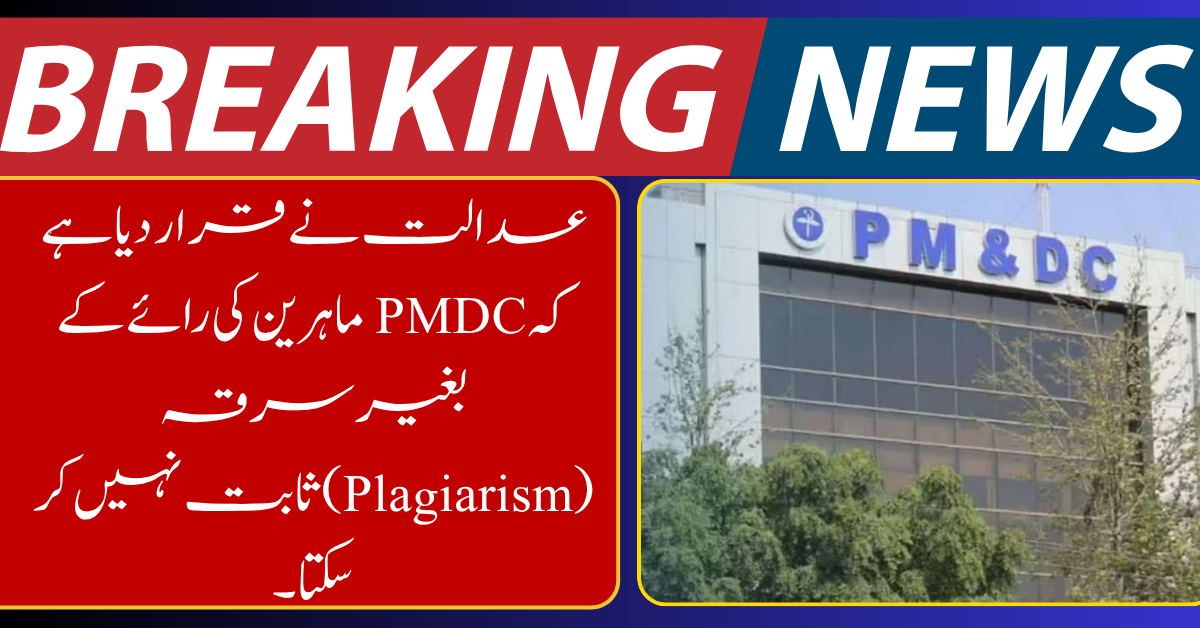
The Medical Tribunal has ruled that the Pakistan Medical and Dental Council (PMDC) can investigate allegations of research misconduct, but it cannot establish plagiarism unless the claim is backed by independent expert evidence and a legally recognized assessment.
The decision came while hearing appeals filed by several doctors who had challenged disciplinary action taken over a retracted medical research paper. The tribunal clarified that plagiarism is a technical academic issue and cannot be determined solely through administrative proceedings.
According to the judgment, the disciplinary record did not include any plagiarism report prepared by the PMDC, the Higher Education Commission (HEC), or any other recognized academic integrity body. The tribunal also noted that no detailed comparative analysis had been carried out between the disputed research and the original study.
Because of the lack of expert evaluation, the tribunal ruled that the plagiarism findings could not be legally sustained. It emphasized that disciplinary authorities must rely on credible expert opinions before reaching such conclusions.
Read More: CSS Exam Registrations in Pakistan Hit Four-Year Low After 48% Decline
However, the tribunal made it clear that the PMDC still has the legal authority to investigate other forms of research misconduct, including data fabrication, data falsification, authorship fraud, ethical violations, and the failure to maintain research records. If proven through fair and lawful proceedings, these actions may still amount to professional misconduct.
The judgment also criticized the lifetime teaching ban imposed on the doctors, declaring it unlawful because the punishment was not authorized under the applicable disciplinary framework and was not mentioned in the show-cause notices issued to the appellants.
The tribunal observed that penalties affecting a doctor’s career, reputation, and livelihood must have clear legal backing and follow the principles of due process. As a result, it set aside all findings and penalties that were based solely on plagiarism allegations.
The ruling is expected to become an important reference for future medical ethics, academic integrity, and professional disciplinary cases in Pakistan, while reaffirming that investigations into research misconduct must be conducted with transparency, expert evidence, and legal fairness.